01
Retain what matters
Save reusable knowledge while skipping temporary, duplicate, or low-value details.

MemorySafe gives AI a decision layer for what to retain, protect, replay, and forget—before useful knowledge disappears or low-value memory takes over.
Save reusable knowledge while skipping temporary, duplicate, or low-value details.
Review, protect, and delete memories instead of treating storage as a black box.
Estimate vulnerability, respect bounded memory, and record why each decision was made.
Start with the free local beta for AI assistants, or tell us how your model decides which training examples to keep.
If your assistant saves a project preference, you can review, protect, or delete it on your device. The private beta opens in waves for Codex and Claude workflows on macOS, Windows, and Linux.
Join the free beta list →As data changes, a limited memory of past training examples can lose rare cases. MemorySafe for Continual Learning helps teams decide which samples stay available for replay. Tell us where this is a problem for you.
Tell us about your model →Memory governance means choosing what to keep or forget and being able to see why. MemorySafe makes those choices before limited capacity is allocated.
Our continual-learning evaluation uses medical images. Financial models, edge devices, and robotics are possible applications to explore with partners.
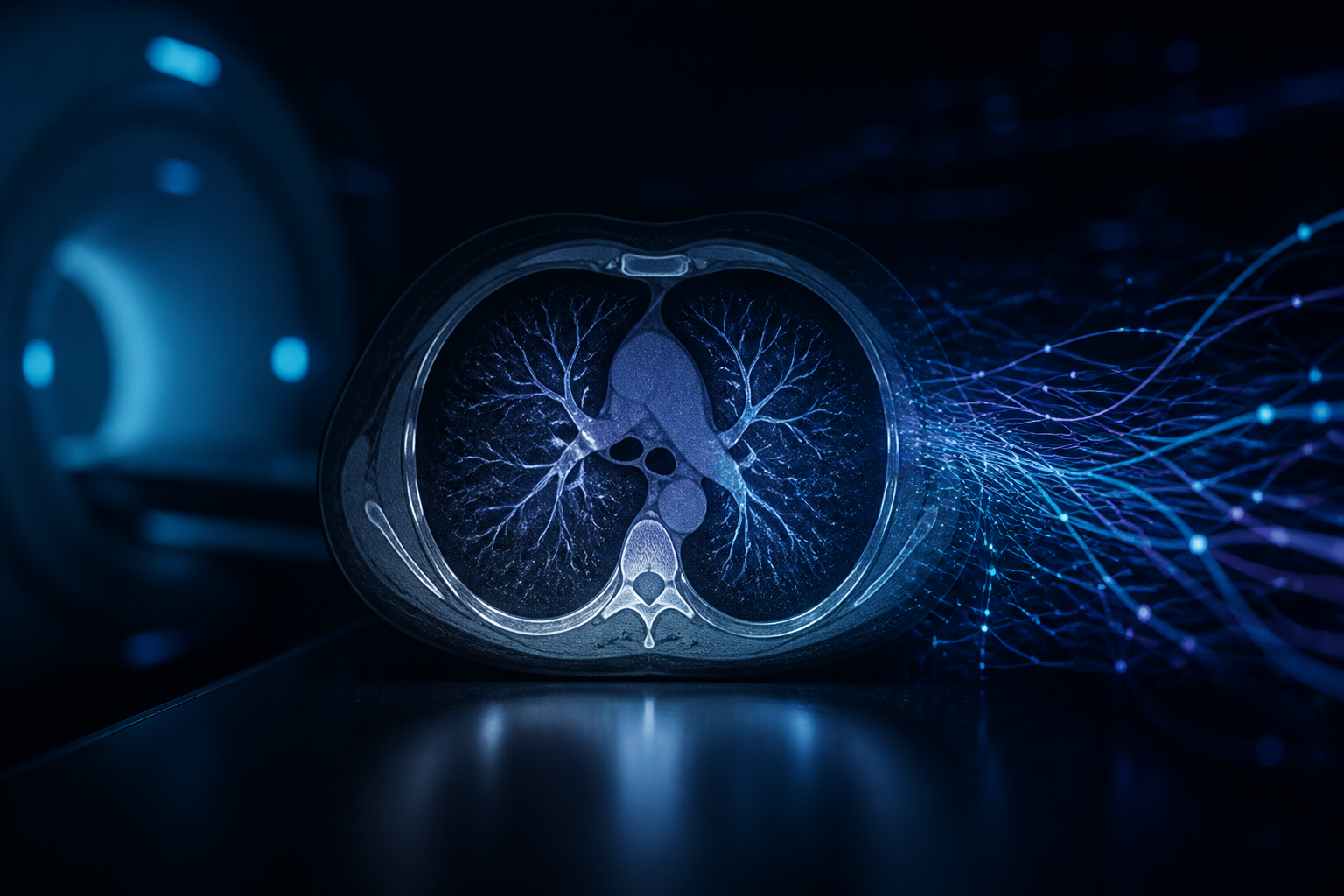
Rare clinical cases can be overwritten as models absorb new data.
Prioritize vulnerable, clinically important samples.
Changing data can make previously reliable financial models drift.
Preserve important evidence across retraining cycles.
Strict storage and compute limits make every retained sample matter.
Allocate bounded memory intentionally.
New environments can interfere with previously learned skills.
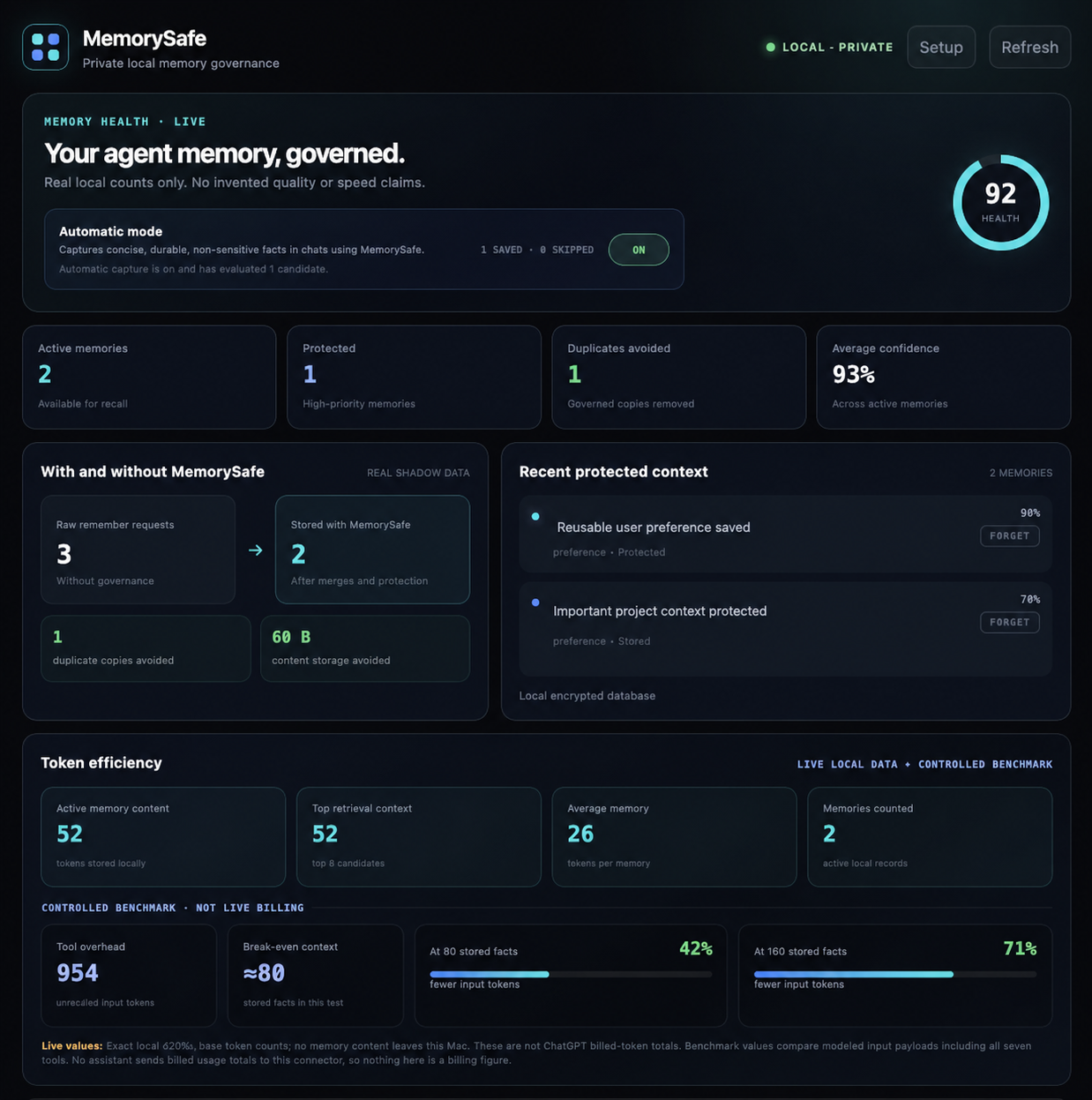
Protect fragile capabilities during adaptation.The Agent dashboard shows reviewable memory controls. A separate held-out evaluation tests the continual-learning policy.
The dashboard shows selection, protected memories, duplicate prevention, and review and deletion controls.
The pneumonia evaluation was numerically ahead of reservoir on the primary measure, but the difference was not statistically significant.
In the held-out pneumonia run, combined AUPRC was 0.702 ± 0.041 for MemorySafe versus 0.687 for reservoir across paired seeds 52–71. The primary comparison was not statistically significant (paired t p = 0.11; Wilcoxon p = 0.15). Rare-class recall was 0.763 versus 0.730 for reservoir.
All policies used the same 500-sample buffer, backbone, schedule, and task order. Only sample selection varied. These results describe the continual-learning kit, not the local Agent beta.
Member of NVIDIA Inception, Google for Startups Cloud, and AWS Activate. Supported by Startup en Résidence — Desjardins.



Explore how governed memory can affect time, replay volume, and operating value using your own assumptions.
Team time today = people × weekly minutes × 52. Potential time returned applies the selected scenario. Illustrative value multiplies those returned hours by the hourly value.
Uses your inputs for planning. Actual results depend on workflow, setup, model costs, and answer quality.
Samples not replayed = current buffer − modeled buffer. Annual data applies sample size, runs per day, and 365 days. Runtime assumes duration falls in direct proportion to buffer reduction.
Use this planning model to compare scenarios. Deployment results depend on workload, buffer policy, and model quality.
The governed-memory database is stored locally. MemorySafe is designed to make stored knowledge and governance actions reviewable rather than invisible.
Governed memory records are stored on the user’s device.
Review, protect, and delete memories from the product interface.
Retain and evict actions can carry a visible reason.
Connected AI services may process selected context under their own terms. “Local” describes the MemorySafe governed-memory database, not every connected service.
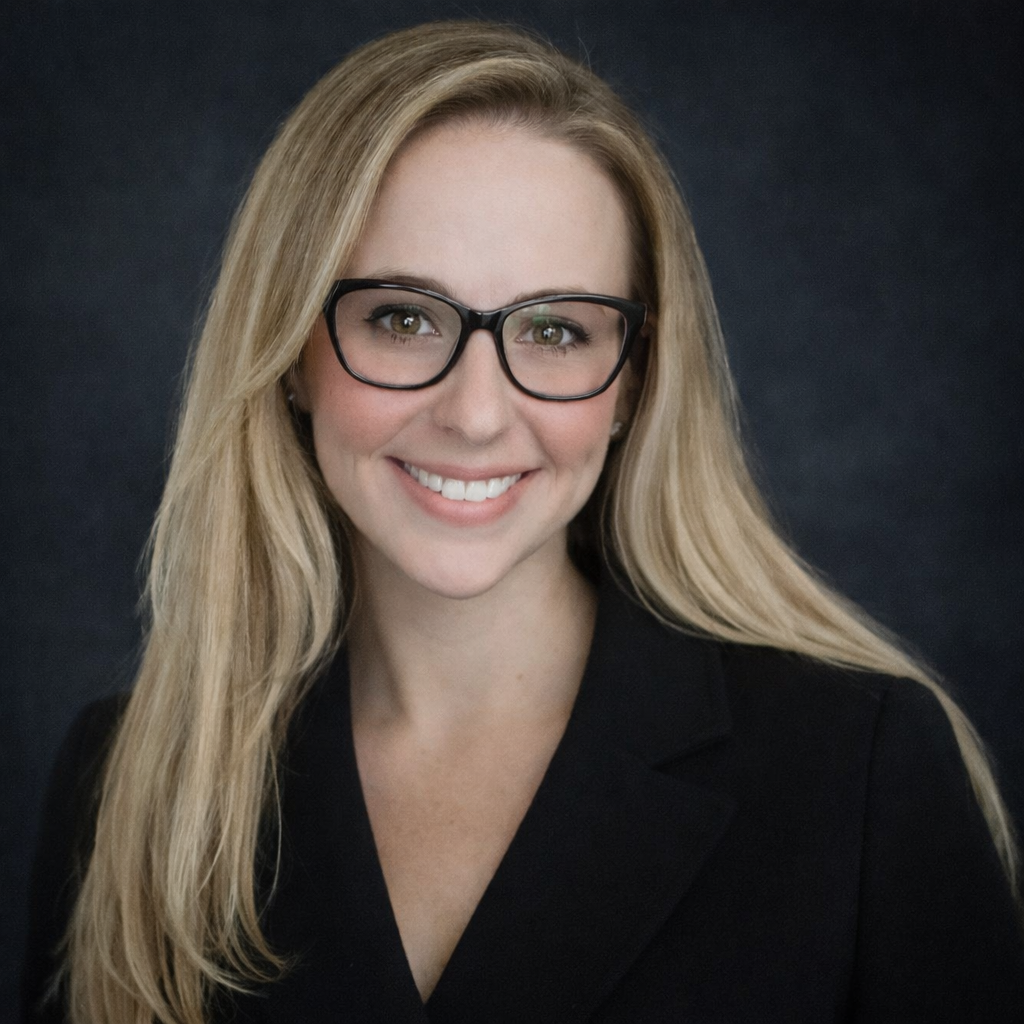
Neuroscience-informed founder building memory infrastructure for AI, inspired by human memory and grounded in continual-learning research.
LinkedIn →Advisors bring financial discipline, company-building strategy, technical perspective, and go-to-market experience.

Startup operator, AI strategist, and venture-capital professional with 13+ years of experience.
LinkedIn →
Bilingual commercial leader connecting financial-services needs with governed AI-memory solutions.
LinkedIn →
Finance leader bringing cost discipline, risk governance, and structured growth strategy.
LinkedIn →
Project-controls professional bringing planning, cost discipline, reporting, and delivery governance from complex infrastructure projects.
LinkedIn →
Software architect bringing experience in agentic AI, software engineering, and technical leadership.
LinkedIn →What memory governance means, what the local beta includes, and how model teams can talk with us.
It means setting rules for what an AI system keeps, being able to inspect the decision, and changing it when needed. In the local Agent beta, you can review, protect, and delete saved memories. For model teams, the focus is which past training examples stay available as learning continues.
Yes. The local Agent version is free during beta. Continual-learning pilots are a separate conversation with model teams.
The private beta is opening in waves for macOS, Windows, and Linux, with Codex and Claude workflows. Joining the list requests an invitation; availability may vary by platform and integration.
The governed-memory database is stored locally. Connected AI services may process selected context under their own terms; “local” does not mean every connected service runs on your device.
The product interface is designed to let you review, protect, and delete stored memories and inspect governance decisions.
Yes. If you train a model on changing data, tell us which past examples are hardest to keep and why they matter. We can then decide together whether a pilot would answer that question. This is separate from the free Agent beta.
Using Codex or Claude? Join the Agent beta for macOS, Windows, and Linux. Training a model on changing data? Tell us what it needs to keep and why.